Hiring a GIS (Geographic Information System) expert may be an uncertain undertaking, particularly when you are not making the mapping and spatial information your day-to-day business. And what will they in reality do? What is it you have to prepare? What will it look like and how long will it take?
These are some of the questions we frequently receive at GIS Navigator. We have, over the years, partnered with local authorities, utility companies, environmental consultancies, and property developers in the UK, and onboarding can be a nightmare depending on the level of understanding of what is involved on both sides.
This guide takes you slowly but surely through what to truly anticipate: how the first conversation should be, all the way to delivering. No acronym, no spit, eight simple an account for how GIS projects are normally launched.
1. The First Conversation is About Your Problem, Not Maps
A decent GIS expert will not start with a discussion of shapefiles or coordinates. They will begin by enquiring about your problem. Whom do you want to make a choice? What information is available to you? Who the hell wants to use the output, a board member that wants a one-page picture, or an engineer that wants to have layers that one can interrogate?
This scoping process is even more important than the majority of clients assume. GIS is a wide field of study; everything from interactive web maps to flood risk modelling systems is in the GIS field. Scopes must be agreed upon early to avoid expensive rework in the future.
What are you to carry to this first interview:
- A clear or clear description of the business question or problem that you are attempting to solve.
- Any data you currently possess (spreadsheets of postcodes, CAD drawings, etc., OS data licences etc.).
- A conception of the end audience and the degree of technicality.
- Any time restrictions motivated at planning applications, reporting periods or presentations made to stakeholders.
Unless you are technically knowledgeable in what software you would like to be used and what coordinate reference system is suitable, then that is the role of the specialist. How do you define success in your job?
2. Data Preparation Takes Longer Than Most People Expect
You are told none of the following by anybody before you bring on board a GIS specialist, the quite large piece of the project time is most often not on mapping, but on cleaning and pre-processing data.
The data which is in the world are not clean. Geocodes of postcodes that are invalid. Name lists of assets whose grid references are not in the correct projection. Spread sheets in which an individual placed notes in columns that are supposed to hold the coordinates. Digitised boundary files which are no longer within line with present OS base maps.
When your GIS expert informs you that it is going to take them two days to prepare the data on a five-day project, he is not inflating the cost he is telling the truth. And do not be surprised at this. It is natural, it is necessary preparations.
The quickest way to make this happen is to provide data in the rawest form possible (instead of PDFs), give any data dictionaries or legends that accompany the files, and to pre-identify any quality problems.
3. Expect Questions, Lots of Them
Someone who becomes silent after two weeks and provide a completed map after that is a red flag rather than assurance by a GIS specialist. The finest practitioners pose questions along the way, the reason being that spatial analysis reflects a multiplicity of choices of methodology, which influence the ultimate outcome.
By way of example: should it be straight-line distance or drive time to determine a catchment area? Did you request a catchment area analysis? How is the speed of travel to be assumed? Should you have or leave off some forms of road? These are not the choices that a GIS expert can make by himself or herself and they will depend on your scenario and your purpose.
Set aside build time as part of your schedule to answer questions. Any slow response on your part will push up the project just as much as a technical issue will.
4. The Deliverable Might Not Be What You’re Picturing
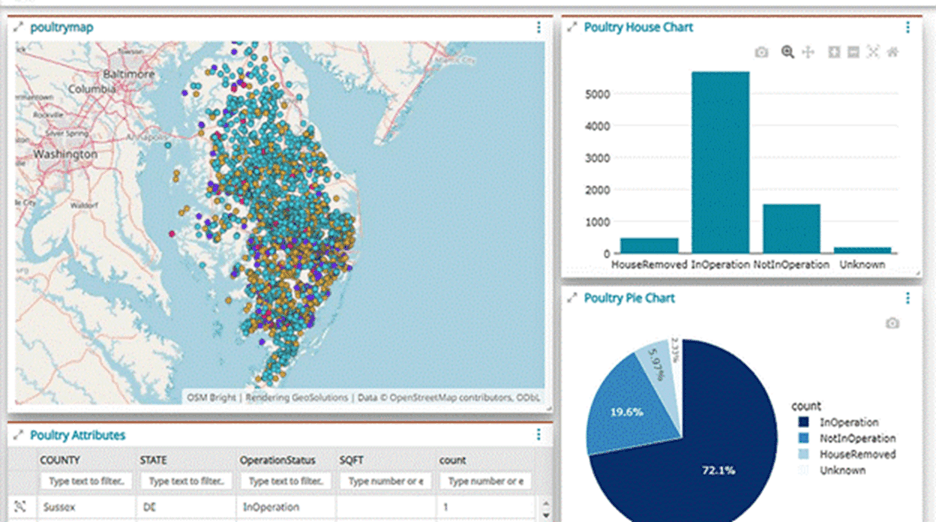
A lot of clients believe that the result of a GIS project will be a fixed and still PDF map. It is usually so, yet GIS work may have a broad spectrum of deliverables based on what you require:
Design elements – The use of interactive web maps which can be explored and filtered by stakeholders.
Geodatabases or repackages that can be used in your own systems.
- Ready to be analysed spatial data in formats such as GeoJSON or Shapefile.
- Robotic reporting software that maps regenerate with change of your data.
- Field teams – spool of printed map series at specified scales.
- Information dashboards with spatial and non-spatial performance data.
Discuss (in advance) how the output will be used. A map that will be put in a PDF report has not the same design requirements as a map that will be projected on the screen during a public consultation. By doing this properly at the beginning, you will not have to have rework commissioned subsequently.
5. Licensing and Data Rights Matter More Than You Think
Ordnance Survey data is bound to be mentioned in case you act with a UK-based expert. OS data is licenced and what you can do with that data will depend on the licence that your organisation has, Public Sector Mapping Agreement, OS Open Data, or you have a commercial licence.
This does not have to be included in any base mapping unless you verify it with your GIS pro. Unless they do, pose the question yourself. By using O. S. data, even unintentionally, otherwise than under the terms of your licence, you expose yourself to legal liability.
The same accounts to any third-party datasets: aerial photography, demographic information, traffic volumes, environmental datasets. There are rights and restrictions. A decent expert will put this properly highlighted in their proposal.
6. Timelines: What’s Realistic?

There is no absolute answer, but here are some approximate points in time of common types of projects which may help as a starting point:
- One thematic map with provided information: 1-3 days.
- A site suitability, catchment area study: 3-7 days.
- An interactive web map of multiple layers: 1 3 weeks.
- Complete implementation of GIS strategy or system: months.
These schedules will depend on the availability of data that is moderate and clean. Also add buffer time when your data is stored in many systems, when it must be sourced away or there are approvals procedures on your end.
The hurry to complete the GIS work is more likely to result in the generation of maps, which are superficial in nature, but have underlying methodological faults that are only found out when it is late. When there has been a hard deadline then disseminate it at the start of the project in order that the scope is realistically scoped.
7. You Should Understand What You’re Receiving
An employee that is worthy of paying attention to as a GIS specialist will not simply present a file and walk off. They are to discuss the methodology, a description of what data was utilized, what assumptions were made, and what were the limitations.
This is important as there are seldom no assumptions involved in spatial analysis. When there is a map where there are 3000 households and you have a 15-minute walking distance in accordance with your facility, your stakeholders should understand what is walking distance there, straight line or not? Reality routing through real pavements? In what way was it modeled?
When any important analysis is given, request a short note of the methodology. Should one be making a decision using the map, the decision-maker must know what he is using to make the decision.
8. A Longer-Term Relationship Often Makes More Sense Than a One-Off Project
Organisations which apply GIS best do not see it as a resource they use once. They establish continuous contact with a specialist with someone having knowledge of their data environment, their systems, and their goals over time.
When you have a regular GIS commission that you are about, you should consider a retained arrangement. This generally saves time on overheads (such as the time taken to brief fresh each time), lessens variation in outputs, and allows the specialist to actively warn you of problems in your information or opportunities that you may have otherwise missed.
Though a long-term relationship may not be on the agenda, consider the first project a relationship-building exercise. The more a specialist knows of your organisation, the better he or she can perform.
Final Thoughts
Hiring a GIS specialist for the first time doesn’t need to be daunting. The process is smoother when both sides come to it with the same expectations: a clear problem to solve, realistic timelines, honest communication about data quality, and a shared understanding of what success looks like.
At GIS Navigator, we work with clients across the UK on projects ranging from quick turnaround mapping tasks to long-running spatial strategy work. If you’re unsure what you need or want a frank conversation about scope before committing to anything, get in touch, we’re happy to talk it through.